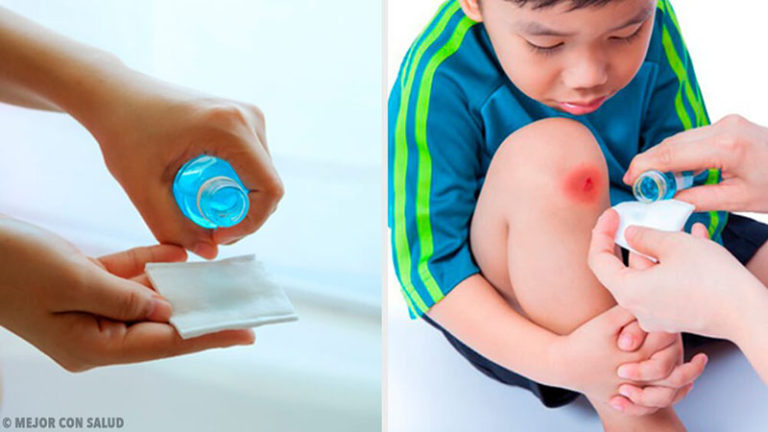
The discovery of antimicrobial substances, such as disinfectants and antiseptics, has greatly helped the prevention of opportunistic infections. Because of this, nowadays they are used both in hospitals and in our own home. Disinfectants and antiseptics are antimicrobial agents with an extended use from the hospital to the domestic environment.
Betadine, hydrogen peroxide and alcohol
Disinfectants and antiseptics are chemical substances designed to reduce the load of microorganisms present in inert materials and living tissues, respectively.
Since its discovery, they have been widely used to fight infections. Its intrahospital use is especially relevant, in order to prevent or reduce the risk of opportunistic infections after a surgical intervention.
Differences between disinfectants and antiseptics
 First, it must be borne in mind that the only physical agents that ensure the inactivation of all forms of microbial life are the sterilizing agents. We would not achieve this through the use of disinfectants or antiseptics.
However, the fact that these elements are not able to completely destroy all microbes does not mean that they are not very useful in preventing infections, which are caused by a type of microorganisms: pathogens.
Disinfectants
Disinfectants, also called germicides, have the ability to reduce the microbial load of a material. They are used to destroy the pathogenic microorganisms of an inanimate object.
These substances end up with the vegetative forms of the microorganisms, but they are not capable of eliminating the forms of resistance ( spores ).
Disinfectants are usually toxic when applied to living tissues, which is why they are usually used to disinfect surfaces and materials. They are used both in the clinic and at home.
Some types of disinfectants are alcohol (also used as an antiseptic), sodium hypochlorite or bleach or detergents.
Antiseptics
 Antiseptics are antimicrobial agents, capable of destroying the pathogenic microorganisms present in a living tissue. In fact, its name derives from its ability to prevent sepsis, or infection.
Unlike disinfectants, these are not toxic to tissues and therefore are applied to living tissue: on the skin or on wounds.
Again, its use is widespread both in the cynical field and in the domestic sphere, finding many of the most common antiseptics in the home medicine cabinet .
Some of the antiseptics, which will be discussed in more depth below are: betadine, hydrogen peroxide and alcohol.
The betadine
The betadine or polyvidone iodine is an iodine compound very effective when it comes to combating a large number of microorganisms. It is used both on wounds and on the skin before performing surgery and is used in both people and animals.
Its mechanism of action is based on the fact that this compound, as well as other iodinated derivatives, is able to penetrate into microorganisms and affect them in protein synthesis and the integrity of its cell wall.
Its application on wounds does not usually generate pain, because upon contact with the skin, the betadine’s iodine is released slowly, preventing the sensation of itching.
Finally, this compound is not indicated in people allergic to iodine , pregnant women, lactating women or babies.
Peroxide
 Hydrogen peroxide, commonly called oxygenated water, is a broad-spectrum antiseptic, capable of destroying a large number of microorganisms.
It is used on the skin, on wounds and even in oral disinfection, although it is also a good disinfectant on materials used in hospital cleaning.
Its mechanism of action is based on its high oxidizing capacity. It is capable of producing free radicals, very active molecules that interfere with a multitude of cellular processes, thus damaging microorganisms.
Alcohol
Alcohols, both ethyl and isopropyl, are organic compounds widely used as disinfectants in cleaning and as antiseptics on wounds.
The mechanism of action of alcohols lies in their ability to destroy the cell membrane of microorganisms and cause the denaturation of their proteins.
Alcohol is commonly used to cleanse the skin, disinfect hands or to prepare skin before an injection. However, its use on wounds is not recommended, as it causes irritation and stinging.
Finally, it is not usually used in the disinfection of surgical instruments, but it is very useful in the hand washing of health personnel, there being those who prefer it before antimicrobial soaps.